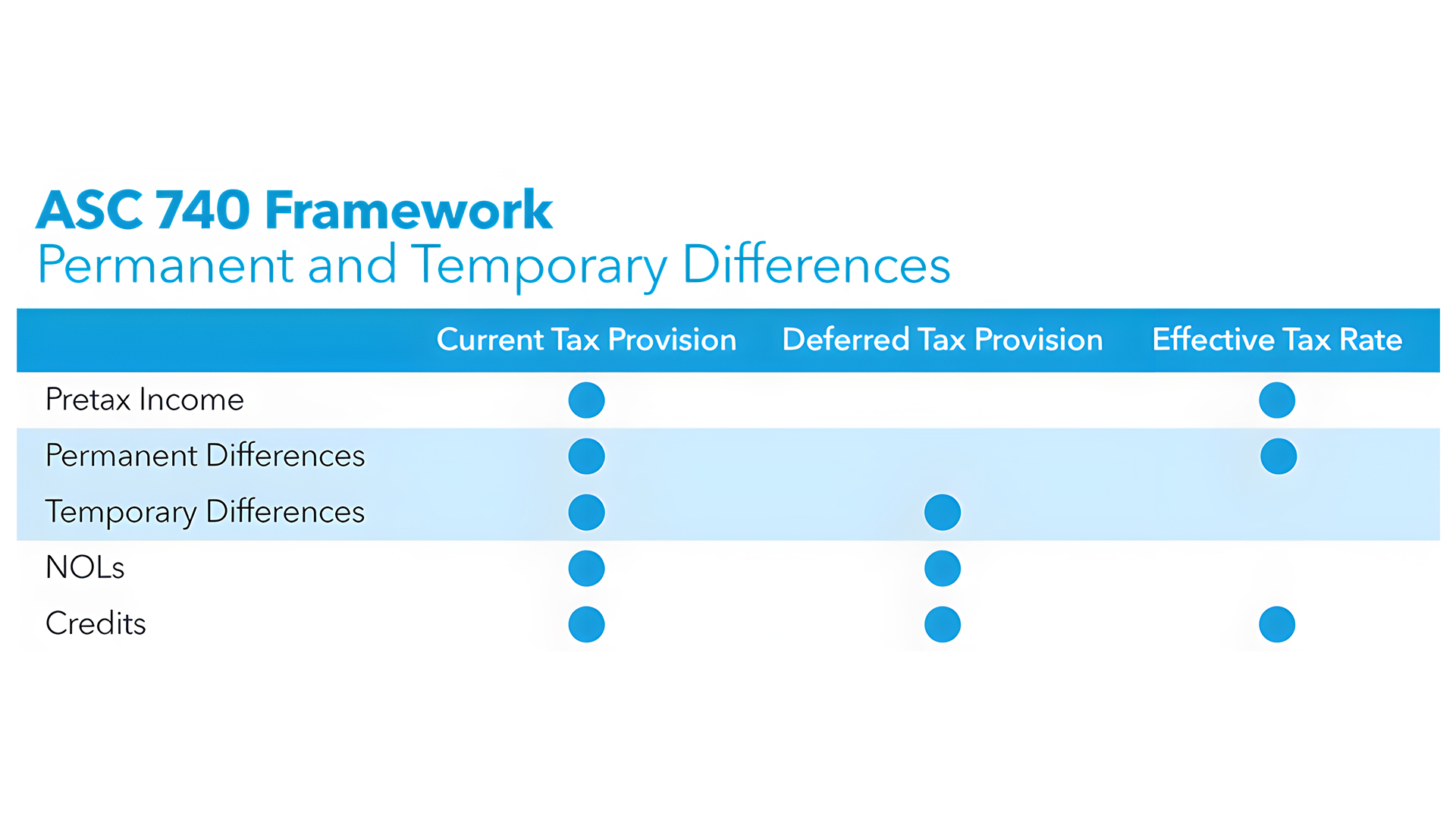
Companies often make errors when applying ASC 740, but these mistakes can be avoided with careful planning. Here are some detailed steps to help get it right:
1. Understand What Is ASC 740
First, make sure you clearly understand the ASC 740. It is the accounting rule that covers both current income taxes and deferred taxes. Current taxes are what you owe now, while deferred taxes come from timing differences that affect future periods. Knowing this helps companies record taxes in the right place and at the right time.
2. Track ASC 740 Temporary Differences
One of the biggest challenges is handling ASC 740 temporary differences. These happen when income or expenses are recognized at different times for accounting purposes compared to tax rules. For example, depreciation for tax purposes may be faster than for financial reporting. To avoid mistakes, companies should keep detailed records of these differences. This way, they can calculate deferred tax assets and liabilities correctly.
3. Calculate the ASC 740 Provision for Income Taxes Carefully
The ASC 740 provision for income taxes combines both current tax expense and deferred tax expense. It shows the total tax cost in the financial statements. Errors in this calculation can lead to restatements and confusion. To avoid mistakes, companies should double-check both parts of the calculation:
- Current tax expense – what is owed for the current year
- Deferred tax expense – the effect of temporary differences on future taxes
4. Apply the ASC 740 Valuation Allowance When Needed
Sometimes, a company may not be able to use all of its deferred tax assets. For example, if a company keeps losing money, it may not generate enough income in the future to use its tax benefits. In these cases, companies must apply an ASC 740 valuation allowance. This reduces the value of deferred tax assets to a more realistic number. Being honest here prevents overreporting and ensures financial statements are accurate.
5. Perform the ASC 740 Effective Tax Rate Calculation Clearly
Investors and auditors want to understand how much tax a company is really paying compared to its income. This is where the ASC 740 effective tax rate calculation comes in. The effective tax rate compares tax expense to pretax income. It should be explained clearly, showing why it is higher or lower than the standard tax rate. This explanation, called reconciliation, builds trust and avoids confusion.
6. Stay Updated With New Rules
Tax rules and accounting standards change over time. For example, new disclosure requirements like ASU 2023-09 ask companies to provide more details about their tax information. Staying updated with these changes is important. It helps companies avoid mistakes and remain compliant with the latest standards.