

Do you ever feel like your business collects a lot of data? You are not the only one. Today, companies have lots of information to handle. However, it is not always easy to change that information into smart and useful decisions. This is where augmented analytics comes in. It is a new way to use smart computers to help you understand data quickly and easily. It helps everyone, not just data experts, make better choices using augmented analytics examples from different industries. This makes analytics for business decision-making easier and more effective.
This comprehensive guide to augmented analytics will focus on what it is and provide real-world examples. It will also offer practical steps to implement it effectively in your organization.
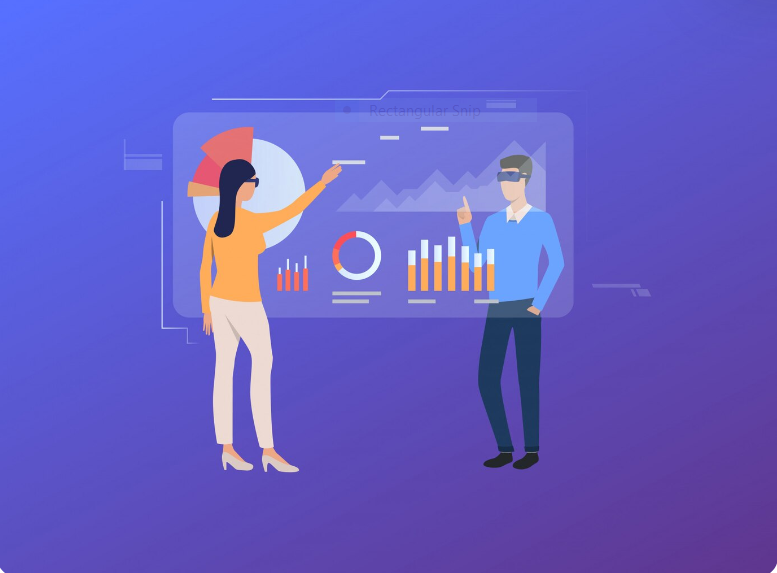
Augmented analytics refers to the use of AI and machine learning (ML) technologies to automate data preparation. It also helps with insight generation and insight explanation. This approach simplifies the data analysis process. It enables users to interact with data using natural language and achieve actionable insights without requiring deep technical expertise.
You can make your data work easier and cut down manual tasks by adding augmented analytics to your organization. It also helps create a culture where decisions are based on data.
Implementing augmented analytics in your organization provides many benefits:
Many industries now use artificial intelligence and machine learning in their analytics tools as it helps them make better decisions. Below are some real-world augmented analytics examples showing how six industries are using it effectively.
Augmented analytics helps banks find risks, stop fraud, and make smarter financial plans. It also makes loan decisions clearer by showing why someone was approved or rejected.
Example:
Banks explain loan rejections using data like low credit scores or bad loan-to-value ratios, which builds customer trust.
Tools:
In marketing, augmented analytics helps companies understand customers, spot trends, and track campaigns automatically. It also helps create more personal ads and content.
Example:
Delta Air Lines and Mars use AI to improve ad performance and link ads to real sales.
Tools:
Augmented analytics checks machines in real time, warns about possible failures, and helps manage inventory better.
Example:
Schaeffler’s factory in Hamburg uses AI to find defects in steel ball bearings.
Tools:
Retailers use augmented analytics to guess product demand, avoid stock problems, and improve customer experience both online and in stores.
Example:
Stores use data to stock up on best-selling products and reduce overstock of slow sellers.
Tools:
Augmented analytics helps telecom companies fix networks before they break, improve customer service with AI chatbots, and target customers better.
Example:
Telecoms use AI to predict maintenance needs and reduce network problems.
Tools:
In healthcare, augmented analytics helps predict patient needs, improve diagnoses, and write medical notes automatically.
Example:
Stanford Health uses AI to take notes during visits, saving time and improving patient care.
Tools:
These augmented analytics examples show how useful augmented analytics is for many businesses. If you want to add more data, make better choices, or improve your plan, augmented analytics can help. It helps your organization make smarter decisions using data.

Consider the following steps to integrate augmented analytics into your business operations effectively:
Evaluate your current data sources, storage solutions, and analysis tools. Understanding the current setup will help identify areas where the augmented analytics can add value.
Decide what you want to achieve with augmented analytics first. This could lead to better customer service, increased sales, or smoother operations.
Choose augmented analytics platforms that match your business needs and basically integrate with your existing system. Look for tools like ThoughtSpot, Oracle Analytics Cloud, IBM Cognos Analytics that offer user-friendly interfaces and strong AI skills.
Give training to help employees learn new tools and steps. Encourage everyone to keep learning to get the most from augmented analytics.
Check often how augmented analytics is helping your business goals. Use key performance indicators (KPIs) to see what is working and what needs fixing.
By doing this, you can use augmented analytics well in your organization. It will help you make data-driven decisions and reach your business goals.
It is necessary to increase the dataset to maximize the efficiency of augmented analytics. This involves increasing your data by:
You build a strong base for analysis by augmenting your dataset. This helps augmented analytics create clear and useful insights.
Augmented analytics is a smart way to understand data and create better business options. It can improve your data and find hidden patterns with the help of AI. It also helps you analyze data faster to make better business decisions. This comprehensive guide to augmented analytics has shared real augmented analytics examples from different industries, showing how powerful it can be. You can stay ahead by using augmented analytics in your organization and encouraging data-driven decision-making. You will work smarter and grow your business with confidence.
Want more insights like this? Explore more on the HubDigit blog!
1. What is augmented data analysis?
Augmented data analysis uses smart tools like AI to help prepare data, find important information, and explain it. It makes understanding data easier for everyone.
2. What is the difference between predictive analytics and augmented analytics?
Predictive analytics uses data to guess the future. Augmented analytics helps you see what is happening now
3. What are examples of analytics?
Examples of analytics are tools that help find patterns, guess what will happen, understand feelings in words, and use smart computer programs to study data. These are more advanced than basic reports.
Get latest updates and offers.
HubDigit is a progressive management consulting that focuses on application of cutting edge technologies
© 2022 HubDigit All Rights Reserved