
The Basics of Hedge Accounting: Definitions, Benefits & Examples

hedge accounting basics

Hedge accounting is a specialised accounting method that enables companies to manage financial risks and mitigate sudden fluctuations in profits. Typically, when businesses utilise financial instruments such as derivatives to hedge against fluctuations in interest rates, currency exchange rates, or commodity prices, the resulting gains and losses are reflected immediately in the income statement. This can make financial results look unstable.

Hedge accounting basics ensure that the effects of these hedges are recorded simultaneously with the risks they are protecting against. In this blog, we will explain what hedge accounting is, explore cash flow hedge accounting, discuss derivative accounting under hedge accounting, and provide clear examples to make the concepts easier to understand.
What Is Hedge Accounting?

Hedge accounting is a specialised accounting method that enables companies to manage financial risks effectively. Normally, when a company uses a hedging instrument like a derivative (for example, a forward contract or an option), any gains or losses from that instrument appear immediately in the income statement. This can create big swings in profits and make financial results look unstable.

Hedge accounting basics solve this problem. It matches the timing of gains and losses on the hedging instrument with the timing of the item being protected. In simple words, it ensures that the effect of the hedge is reflected in the financial statements as the risk it is protecting against.

By using hedge accounting, companies can show their financial results more accurately and reduce sudden changes in reported earnings.

Types of Hedge Accounting

cash flow hedge accounting

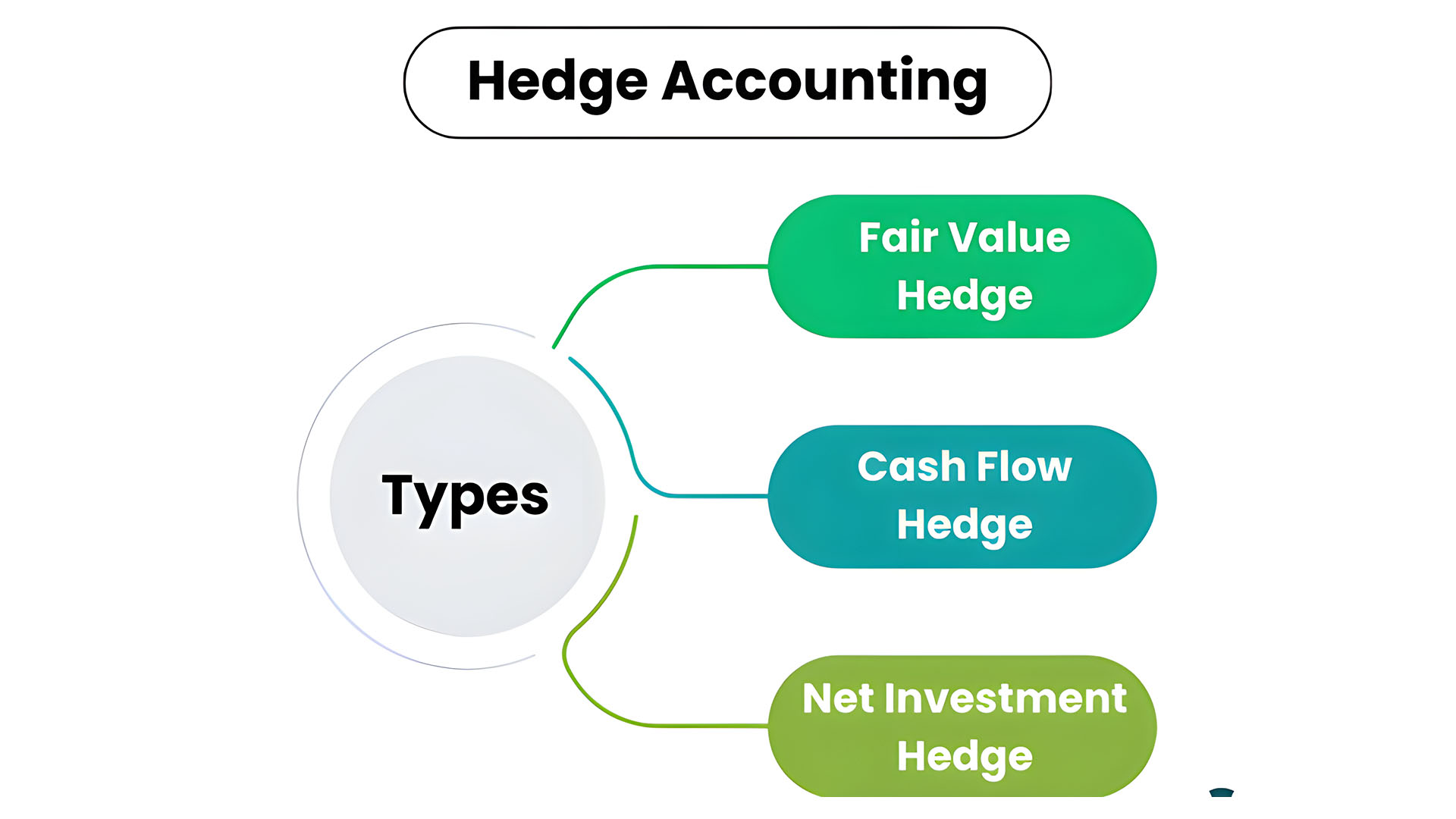
There are three main types of hedge accounting:

1. Fair Value Hedge Accounting

Fair value hedge accounting is used to protect against changes in the fair value of an asset or liability.

For example, if a company has a fixed-rate loan and interest rates change, a derivative can be used to hedge the risk. The gains or losses on both the derivative and the loan are recorded in the same period.

This method helps make sure that any changes in the value of the asset or liability don’t create confusing swings in financial statements.

2. Cash Flow Hedge Accounting

Cash flow hedge accounting is used to protect against variability in future cash flows.

For example, a company expecting to receive payments in a foreign currency may be concerned about exchange rate fluctuations. It can use a forward contract as a hedge. The effective portion of the gain or loss on the hedge is recorded in other comprehensive income and only later moved to the income statement when the cash flow occurs.

Cash flow hedge accounting enables companies to manage risks associated with changes in interest rates, foreign exchange rates, and commodity prices.

3. Net Investment Hedge Accounting

Net investment hedge accounting protects against foreign currency risk in a foreign operation.

For example, if a company owns a business overseas, currency changes can affect the value of its investment. Using a hedge, any gains or losses on the hedging instrument are recorded in other comprehensive income and only recognized in profit or loss when the foreign investment is sold.

Benefits of Hedge Accounting

Using hedge accounting has many advantages:

  • Reduces Earnings Volatility: Gains and losses from derivatives are realised simultaneously with the risk they protect, resulting in smoother financial results.
  • Improves Financial Reporting: It shows a clearer picture of a company’s performance.
  • Enhances Risk Management: Helps companies manage risks from changes in interest rates, currencies, and commodities.
  • Supports Strategic Planning: Companies can plan future cash flows and budgets with more confidence.

These benefits make hedge accounting basics essential for companies using financial instruments to manage risks.

Example of Hedge Accounting

Imagine a company exports goods to Europe. It expects to receive €1 million in three months, but it worries that the Euro might weaken against its home currency.

To protect itself, the company enters into a forward contract to sell €1 million at a fixed rate. Under cash flow hedge accounting, the gain or loss on this forward contract is first recorded in other comprehensive income. When the payment is received, the amount is reclassified to the income statement.

This method ensures that fluctuations in currency rates do not create sudden swings in the company’s reported profits.

Case Study: IndusInd Bank’s Hedge Accounting Issue

Overview:
In March 2025, IndusInd Bank in India reported a 2.35% decline in its net worth due to an underestimation of the cost of foreign exchange hedges. The Reserve Bank of India (RBI) began investigating the bank’s accounting for derivatives to determine if its foreign exchange hedges were effective and to identify if other banks might have similar issues.

Key Issues:

  • Internal Swaps: The bank used internal swaps, exchanging one cash flow for another. When some deals ended early, profits were recorded immediately, but the losses were not, making the bank’s financial health appear better than it was.
  • Regulatory Scrutiny: The RBI examined whether other banks with foreign liabilities had similar unrecorded losses, which could indicate a broader issue in the banking sector.

Implications:

  • Financial Reporting: This highlighted the importance of proper hedge accounting in providing a true picture of a bank’s finances.
  • Regulatory Oversight: The case led to increased scrutiny by regulators to ensure banks follow hedge accounting rules and maintain transparency.

How to Qualify for Hedge Accounting

hedge accounting basics

Not every hedging activity automatically qualifies for hedge accounting. Companies must meet specific criteria to apply these rules:

  1. Formal Documentation
    Before starting a hedge, companies must document the hedging relationship. This includes identifying the hedged item, the hedging instrument, and the risk being hedged.
  2. Hedge Effectiveness
    The hedge must be highly effective in offsetting changes in the value or cash flows of the hedged item. Companies usually measure effectiveness using quantitative methods.
  3. Ongoing Assessment
    Hedge effectiveness must be checked regularly. If the hedge no longer meets the effectiveness criteria, hedge accounting cannot be applied to that period.
  4. Compliance with Accounting Standards
    Companies must follow accounting standards, such as IFRS 9 or ASC 815. This ensures consistent reporting and transparency for investors

By meeting these requirements, businesses can safely use cash flow hedge accounting or derivative accounting under hedge accounting to manage financial risks.

Derivative Accounting Under Hedge Accounting

When companies use derivatives, such as swaps, forwards, or options, as hedges, derivative accounting under hedge accounting rules becomes applicable.

  • The derivative’s value changes over time due to market conditions.
  • Hedge accounting ensures that these changes are recorded in the financial statements in a manner that aligns with the risk being hedged.
  • Without hedge accounting, these gains and losses would appear immediately in profit or loss, which could mislead investors or management.

In short, derivative accounting under hedge accounting helps align accounting with real economic risks.

Final Thoughts

Hedge accounting is a powerful tool for companies managing financial risks. By applying hedge accounting basics, companies can reduce earnings volatility, enhance financial reporting, and effectively manage future cash flows. Understanding what hedge accounting, cash flow hedge accounting, and derivative accounting under hedge accounting is essential for any business using hedging instruments.

With simple examples and clear accounting rules, hedge accounting enables companies to mitigate financial uncertainty while presenting accurate financial statements. Learn more and simplify your accounting processes with HubDigit today!

Common Queries

1. What is hedge accounting with an example?

Hedge accounting matches gains or losses from a hedge, like a derivative, with what it protects. This keeps profits more stable.

Example: A company receives money in a different currency. It uses a contract to lock the rate. Hedge accounting records the gain or loss when the money is received, thereby avoiding significant swings in profit.

2. What is hedging and its benefits?

Hedging is a strategy used to mitigate financial risk. It helps reduce losses from changes in prices, rates, or currency.

3. What are the advantages and disadvantages of hedges?

Hedging helps reduce potential losses from price, rate, or currency fluctuations, making finances more stable. However, it can also limit potential profits if the market moves in your favour.