

Government contractors often work on big projects funded by federal agencies. These contracts come with strict rules, and even a minor accounting error can result in penalties or a failed audit. That’s why GAAP for government contractors is so important.
GAAP stands for Generally Accepted Accounting Principles. It is a set of rules and guidelines that ensure financial reports are correct, consistent, and transparent. By following government contract accounting rules and GAAP principles government contracting, contractors build trust with the government, pass audits, and stay competitive.
In this guide, we’ll break down what GAAP means for contractors, explain US GAAP revenue recognition, and demonstrate how GAAP prepares businesses for govcon audit readiness.
GAAP is the standard framework of accounting principles used in the United States. It was created to ensure that all businesses report their finances in a uniform manner. For government contractors, GAAP is not optional—it’s a requirement.
Key points about GAAP:
Following GAAP for government contractors also ensures compliance with FAR (Federal Acquisition Regulation) and oversight bodies like DCAA (Defense Contract Audit Agency).

Government contracting is very different from regular business. Contracts are often large, long-term, and involve multiple entities with various obligations. That’s why government contract accounting rules are strict. GAAP provides the framework necessary to address these challenges.
Here’s why GAAP is critical:
GAAP requires accrual accounting, which means contractors record revenue when it’s earned—not when cash is received. This rule is especially important for projects that last months or years.
Contractors must separate direct costs (such as labour) from indirect costs (such as rent). Following GAAP principles, government contracting ensures every dollar is tracked correctly.
By maintaining records in accordance with GAAP, contractors are always prepared for audits. This builds credibility and demonstrates compliance with government contract audit readiness standards.
When applying GAAP principles to government contracting, these areas are most important:
These principles are what make GAAP for government contractors a reliable system that supports long-term compliance.
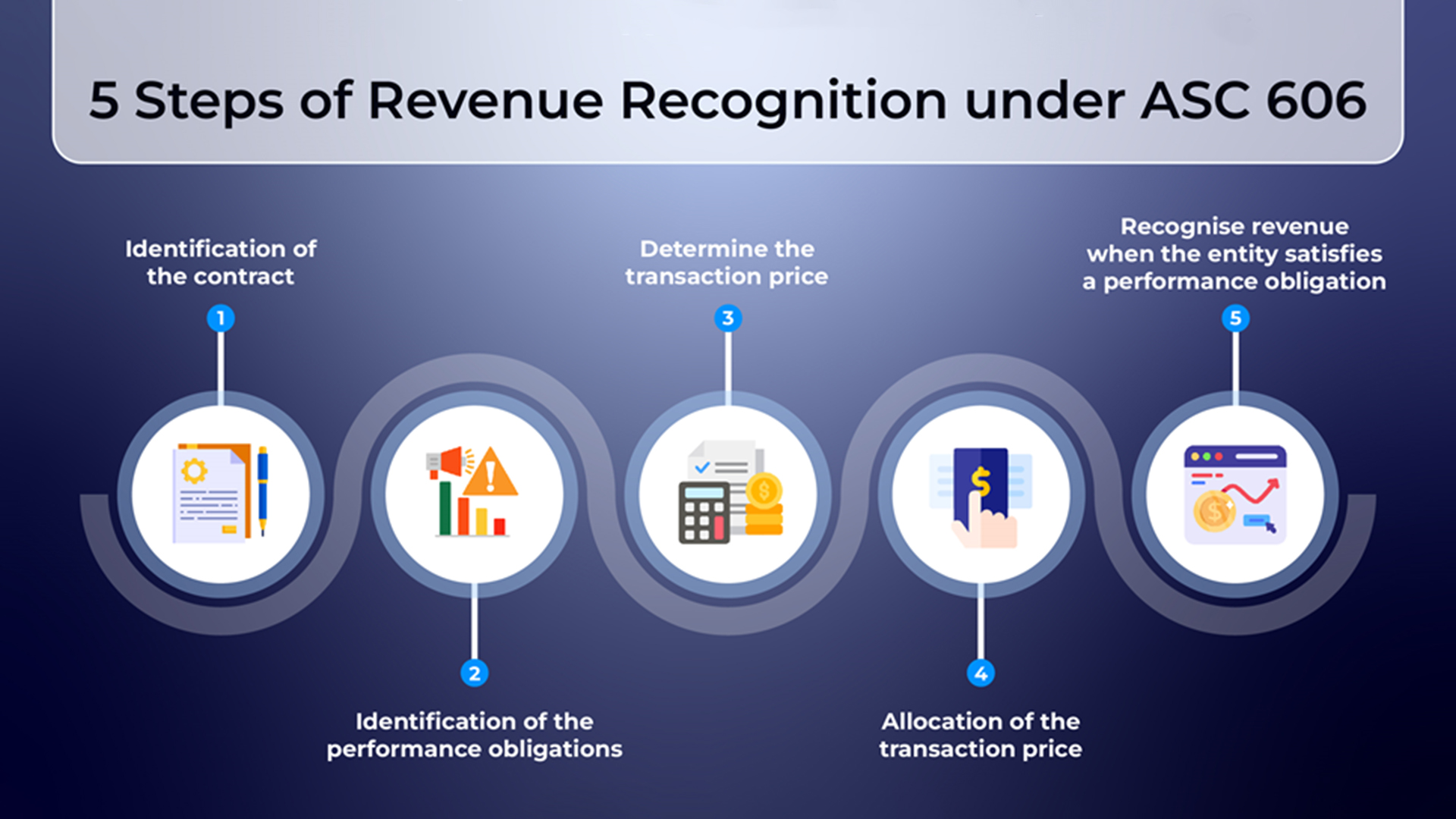
One of the most important parts of GAAP is revenue recognition. For US GAAP revenue recognition, the main rule is ASC 606. This rule standardises how businesses recognise revenue.
This step requires a clear and valid contract with the customer. A contract can be written, verbal, or implied, but it must show that:
Example: A government agency signs a contract with a contractor to build a software system. The contract lists the scope, payment terms, and timeline.
A performance obligation is essentially a contractual promise to deliver goods or services. Some contracts may have a single obligation; others may have multiple commitments. Each obligation must be identified clearly.
Example: In the software project, the obligations might include:
Each of these is a separate performance obligation.
The transaction price is the total amount the contractor expects to be paid. It includes fixed amounts, variable amounts (like bonuses or penalties), or discounts.
Example: The software contract is worth $2 million, with a $100,000 bonus for early delivery and a $50,000 penalty for delay. The contractor must consider these when setting the transaction price.
If the contract has more than one performance obligation, the total price must be split fairly between them. This allocation is based on the relative standalone price of each obligation.
Example:
Total = $2 million. Each piece of work gets its share of the contract price.
Revenue is recognized when the contractor fulfils a performance obligation—either over time or at a specific point in time.
Example:
Following US GAAP revenue recognition ensures that financial statements are accurate and avoids errors that could lead to audit issues.
Sticking to GAAP principles, government contracting offers several benefits:
Errors in US GAAP revenue recognition or accounting rules can cause contract disputes. GAAP reduces this risk.
Even though GAAP helps, it comes with challenges:
Despite these challenges, applying GAAP for government contractors is worth the effort.

One of the biggest reasons to follow GAAP is to prepare for audits. Govcon audit readiness means having everything documented, transparent, and compliant with DCAA and FAR.
Being audit-ready gives contractors a competitive edge and keeps contracts safe from disputes.
For government contractors, GAAP isn’t just about accounting—it’s about survival. By following government contract accounting rules, applying US GAAP revenue recognition, and adopting GAAP principles for government contracting, contractors build trust, avoid penalties, and win more contracts.
Most importantly, GAAP ensures govcon audit readiness, which is the key to long-term success in government contracting. Want expert help in making your GovCon accounting fully GAAP-compliant? Hubdigit can guide you every step of the way.
1. What is the importance of GAAP in accounting?
GAAP makes sure your financial statements are accurate and follow standard rules. This builds credibility and reliability for your business.
2. What does GAAP say about revenue recognition?
GAAP says revenue can only be recorded when goods or services are delivered, and when there’s a reasonable expectation of getting paid.\
3. What are the four GAAP rules?
The four financial statements required by GAAP are balance sheets, statements of shareholder and owner’s equity (or statement of net assets for nonprofits), statements of cash flows, and income statements.
Get latest updates and offers.
HubDigit is a progressive management consulting that focuses on application of cutting edge technologies