What Is ASC 740? How to Get Tax Reporting Right and Avoid Mistakes

what is ASC 740

Getting tax reporting wrong can create big problems for any company. That’s why it’s important to know what is ASC 740 and how to apply it correctly. ASC 740 is the U.S. accounting rule that explains how businesses should handle income taxes in their financial statements. When done right, it helps companies show a clear and honest picture of their tax expenses.

In this guide, we’ll break down what is ASC 740, explain the ASC 740 provision for income taxes, go over ASC 740 temporary differences, discuss the ASC 740 valuation allowance, and cover the ASC 740 effective tax rate calculation.

What Is ASC 740?

Let’s start with the basics. What is ASC 740?

ASC 740 is a set of accounting standards that deals with income taxes under U.S. GAAP. It applies to both public and private companies. The main goal of ASC 740 is to match tax expenses with the right accounting period. This means a company must record both current taxes it owes now and future taxes it expects to pay or save because of timing differences.

In short, ASC 740 is the rulebook for how companies report income taxes in financial statements so that investors, auditors, and regulators see an accurate picture.

ASC 740 Provision for Income Taxes

One of the most important parts of ASC 740 is the ASC 740 provision for income taxes. This is the calculation that determines the total tax expense shown on a company’s financial statements.

The ASC 740 provision for income taxes includes two parts:

  1. Current tax expense or benefit – the taxes owed (or refunded) for the current year.
  2. Deferred tax expense or benefit – the effect of timing differences that will impact future taxes.

If the ASC 740 provision for income taxes is not calculated correctly, it can cause major issues. Companies might have to restate their earnings, lose credibility with investors, or even face penalties. That’s why this calculation needs to be accurate and carefully reviewed each reporting period.

ASC 740 Temporary Differences

ASC 740 temporary differences

Now, what creates those deferred taxes? The answer is ASC 740 temporary differences.

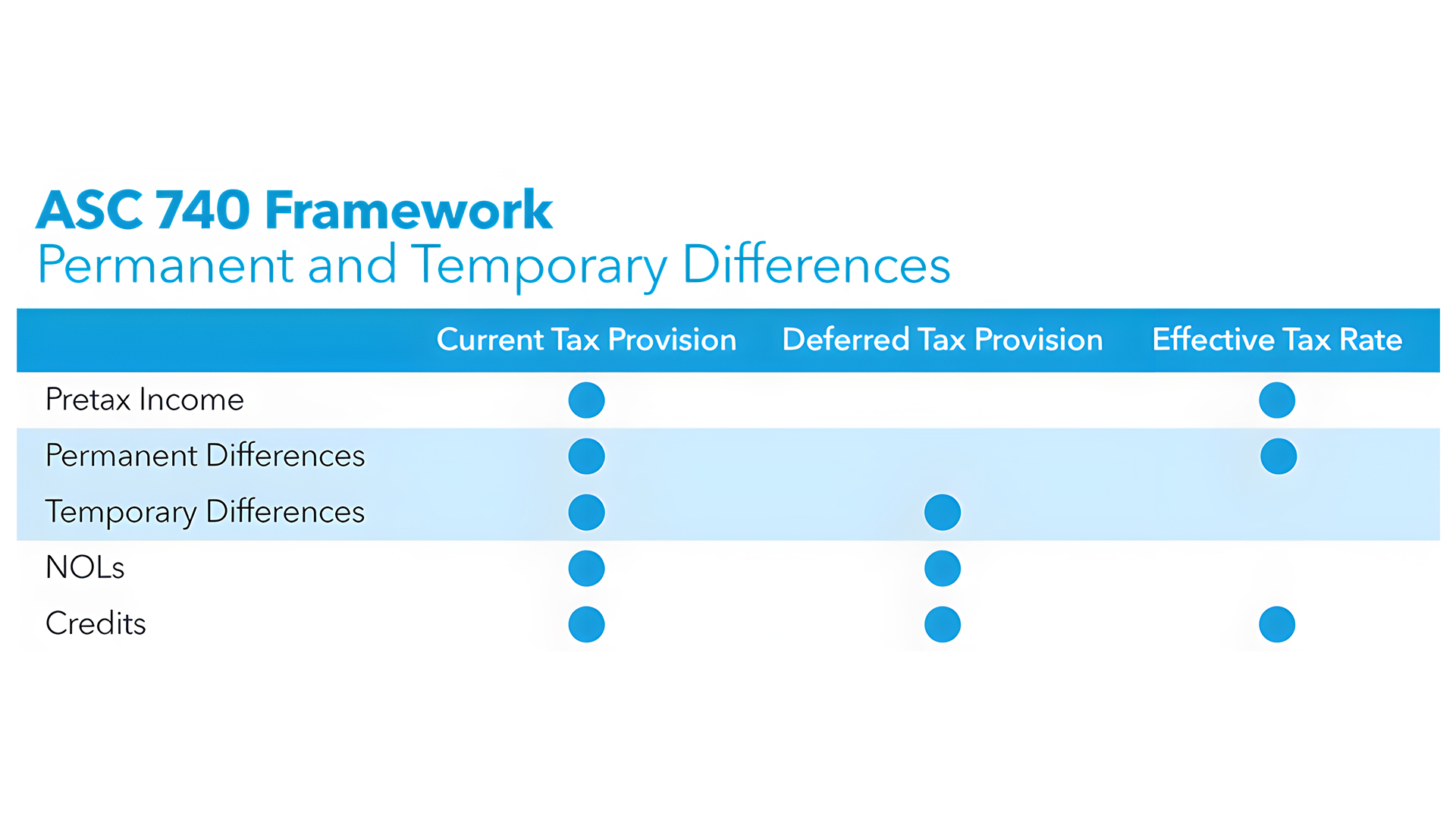
ASC 740 temporary differences happen when income or expenses are treated differently for accounting purposes versus tax purposes. Common examples include:

  • Depreciation: For tax purposes, companies might use faster methods (like bonus depreciation), while for accounting they may use straight-line depreciation.
  • Net Operating Losses (NOLs): Losses carried forward for tax purposes can reduce future taxable income.
  • Reserves or allowances: Expenses recognized in financial reporting may not be deductible for tax until later.

These ASC 740 temporary differences create either:

  • Deferred tax liabilities – taxes that will be paid in the future, or
  • Deferred tax assets – benefits that reduce taxes in future periods.

Tracking these differences is essential because they directly affect the ASC 740 provision for income taxes and the overall financial results.

ASC 740 Valuation Allowance

Sometimes, companies may not be able to use all their deferred tax assets. For example, if a company keeps losing money, it might not earn enough taxable income to use its net operating losses. In such cases, accountants apply an ASC 740 valuation allowance.

The ASC 740 valuation allowance reduces the value of deferred tax assets on the balance sheet. It’s a way of being realistic and not overstating future tax benefits.

Creating a valuation allowance involves judgment. Management must decide whether it’s “more likely than not” that the deferred tax assets will not be used. By applying the ASC 740 valuation allowance, companies avoid misleading investors about their financial strength.

ASC 740 Effective Tax Rate Calculation

Investors don’t just look at the total tax expense—they want to understand the rate behind it. This is where the ASC 740 effective tax rate calculation comes in.

The ASC 740 effective tax rate calculation compares income tax expense to pretax income, showing the percentage of earnings that go to taxes. For example, if a company earns $100 million before tax and reports $20 million in tax expense, its effective tax rate is 20%.

This number is rarely the same as the statutory tax rate. That’s because of permanent differences (like tax credits or non-deductible expenses), ASC 740 valuation allowance, and the impact of ASC 740 temporary differences.

The ASC 740 effective tax rate calculation is important because it explains why a company pays more or less tax than the standard rate. A clear reconciliation builds trust with shareholders and regulators.

Why Getting ASC 740 Right Matters

Mistakes in ASC 740 can be costly. Errors in the ASC 740 provision for income taxes, misjudging ASC 740 temporary differences, or overlooking the need for an ASC 740 valuation allowance can all lead to restatements and credibility issues. A wrong ASC 740 effective tax rate calculation can confuse investors and make it hard to plan future taxes.

Companies that understand what is ASC 740 and apply it correctly avoid these risks. They also provide clearer financial reporting, which helps build confidence among stakeholders.

How to Avoid ASC 740 Mistakes

Companies often make errors when applying ASC 740, but these mistakes can be avoided with careful planning. Here are some detailed steps to help get it right:

1. Understand What Is ASC 740

First, make sure you clearly understand the ASC 740. It is the accounting rule that covers both current income taxes and deferred taxes. Current taxes are what you owe now, while deferred taxes come from timing differences that affect future periods. Knowing this helps companies record taxes in the right place and at the right time.

2. Track ASC 740 Temporary Differences

One of the biggest challenges is handling ASC 740 temporary differences. These happen when income or expenses are recognized at different times for accounting purposes compared to tax rules. For example, depreciation for tax purposes may be faster than for financial reporting. To avoid mistakes, companies should keep detailed records of these differences. This way, they can calculate deferred tax assets and liabilities correctly.

3. Calculate the ASC 740 Provision for Income Taxes Carefully

The ASC 740 provision for income taxes combines both current tax expense and deferred tax expense. It shows the total tax cost in the financial statements. Errors in this calculation can lead to restatements and confusion. To avoid mistakes, companies should double-check both parts of the calculation:

  • Current tax expense – what is owed for the current year
  • Deferred tax expense – the effect of temporary differences on future taxes
4. Apply the ASC 740 Valuation Allowance When Needed

Sometimes, a company may not be able to use all of its deferred tax assets. For example, if a company keeps losing money, it may not generate enough income in the future to use its tax benefits. In these cases, companies must apply an ASC 740 valuation allowance. This reduces the value of deferred tax assets to a more realistic number. Being honest here prevents overreporting and ensures financial statements are accurate.

5. Perform the ASC 740 Effective Tax Rate Calculation Clearly

Investors and auditors want to understand how much tax a company is really paying compared to its income. This is where the ASC 740 effective tax rate calculation comes in. The effective tax rate compares tax expense to pretax income. It should be explained clearly, showing why it is higher or lower than the standard tax rate. This explanation, called reconciliation, builds trust and avoids confusion.

6. Stay Updated With New Rules

Tax rules and accounting standards change over time. For example, new disclosure requirements like ASU 2023-09 ask companies to provide more details about their tax information. Staying updated with these changes is important. It helps companies avoid mistakes and remain compliant with the latest standards.

Final Thoughts

Understanding what is ASC 740 is the first step toward accurate tax reporting. By carefully calculating the ASC 740 provision for income taxes, managing ASC 740 temporary differences, applying the ASC 740 valuation allowance, and performing a clear ASC 740 effective tax rate calculation, companies can avoid costly mistakes.

Getting ASC 740 right isn’t just about compliance; it’s about trust, transparency, and showing investors the real picture of a company’s financial health.

Need help with ASC 740? Hudigit makes tax reporting simple and accurate.

Common Queries

1. What is the ASC 740 method?

It is a balance sheet method for income taxes. Companies record future tax assets, future tax liabilities, and valuation allowances. These are then used to calculate the tax provision.

2. How to rectify a mistake in a tax audit report?

You can fix it by filing a rectification request on the income tax e-Filing portal. This is allowed only for returns already processed by the CPC.

3. What is the justification for income taxes according to ASC 740?

ASC 740 is based on the recognition of assets and liabilities. It matches tax expenses with the right period by recording future tax assets and liabilities on the balance sheet.